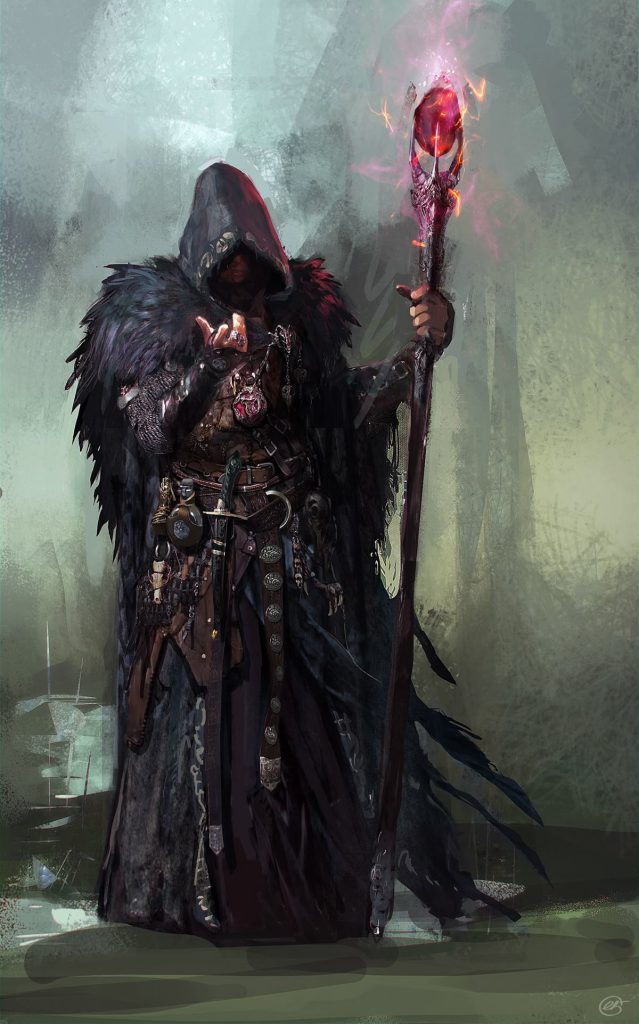
Within the Mages Guild of Cyrodiil, success is only one part of magical advancement. While approved spells, refined theories, and stable enchantments represent the visible output of the Arcane University, an equally important—but far less understood—component of the system is failure. Failed magical research is not discarded or forgotten. Instead, it is systematically recorded, analyzed, and reintegrated into the Guild’s broader knowledge structure.
This process ensures that even unsuccessful experiments contribute to long-term magical understanding. In many cases, failed research provides more valuable insight than successful outcomes, revealing instability patterns, structural limitations, and unintended arcane interactions that would otherwise remain unknown.
The Arcane University treats failure not as an endpoint, but as a data source.
Failure as a Structured Data Category
Within the Mages Guild research system, failed experiments are not simply marked as “unsuccessful.” They are categorized into structured failure types based on their behavior, cause, and level of magical instability.
These categories allow the Guild to interpret failure in a meaningful way rather than treating all unsuccessful outcomes as identical. A spell that fails due to unstable energy alignment is fundamentally different from a spell that fails due to incorrect theoretical design or insufficient magical output.
By distinguishing between these outcomes, the Arcane University builds a layered understanding of why magic behaves unpredictably under certain conditions.
Failure, in this sense, becomes a structured form of diagnostic information.
The Recording Process of Failed Experiments
When a magical experiment fails within the Arcane University system, it is immediately documented through a standardized archival procedure. This includes detailed accounts of the spell parameters, environmental conditions, caster influence, and the exact nature of the failure event.
These records are not informal notes. They are formally indexed entries within the Guild’s archival network, stored alongside successful spell data but clearly labeled within the failure classification system.
This ensures that failed experiments remain accessible for future reference, allowing researchers to revisit previous attempts when developing new magical theories.
In many cases, spells that are initially rejected or fail during testing are later reanalyzed and reworked into successful frameworks based on improved understanding derived from their original failure data.
Failure Classification and Pattern Recognition
One of the most important functions of the Arcane University’s failure system is pattern recognition. By analyzing large volumes of failed experiments, the Guild is able to identify recurring instability trends across different types of magic.
For example, certain categories of conjuration may consistently fail under specific energy conditions, while restoration-based experiments may exhibit predictable structural collapse when combined with unfamiliar arcane components.
These patterns allow the Guild to refine its theoretical models of magic. Instead of relying solely on successful spellcasting outcomes, researchers can also study where and why magic breaks down.
This creates a dual-layered knowledge system built on both success and failure.
The Role of Failed Research in Spell Development
Failed experiments often serve as the foundation for future spell development. When a new spell concept fails, it does not necessarily mean the idea is invalid. Instead, it often indicates that the underlying structure requires modification.
In many cases, later successful spells are built directly from previously failed research attempts. Adjustments in energy calibration, formula restructuring, or environmental constraints can transform an unstable concept into a fully functional spell.
Because of this, failed research is never removed from the system. It remains permanently stored as part of the Guild’s collective knowledge base, where it can be referenced during future development cycles.
This creates a continuous feedback loop where failure informs success.
Archival Integration Within the Mages Guild System
Once a failed experiment has been fully documented, it is integrated into the Mages Guild Archives under a separate classification tier. This ensures that failure data is preserved alongside successful spell records while remaining clearly distinguished for research purposes.
The Arcane University maintains oversight of this integration process, ensuring that all failure records are properly indexed and accessible to authorized researchers.
In some cases, particularly significant failures are flagged for deeper analysis and elevated to specialized research teams. These teams examine whether the failure indicates a flaw in the experiment itself or a limitation in existing magical theory.
This allows the Guild to continuously refine its understanding of arcane systems over time.
Learning From Instability
One of the most valuable contributions of failed research is its ability to reveal instability within magical systems. While successful spells demonstrate what magic can do under controlled conditions, failed experiments expose the boundaries of those systems.
This includes identifying:
- energy thresholds where spells collapse
- incompatible magical interactions
- environmental conditions that disrupt casting
- structural weaknesses in theoretical spell design
By studying these instability points, the Arcane University is able to refine its predictive models for future experiments. This reduces the likelihood of repeated failure and improves the overall efficiency of magical research.
In this way, failure is not just recorded—it actively shapes future innovation.
Why Failed Research Is Never Deleted
Unlike conventional systems where failed attempts are often discarded, the Mages Guild treats all experimental outcomes as permanent additions to its knowledge base. This is because magical failure is often unpredictable and context-dependent.
A failed experiment in one environment may become viable under different conditions, or when combined with new theoretical frameworks. Deleting such data would remove the possibility of rediscovery.
Instead, the Guild preserves all failure records indefinitely, ensuring that no potential insight is lost over time.
This archival philosophy reinforces the Guild’s long-term approach to magical development, where knowledge accumulation is prioritized over short-term success rates.
Institutional Value of Failure Data
From an institutional perspective, failed magical research serves several critical functions beyond simple documentation. It helps maintain safety standards, informs future experiment approval decisions, and supports long-term theoretical development.
The Arcane University relies on failure data when evaluating new experimental proposals. If a similar experiment has failed repeatedly under known conditions, new proposals may be flagged for additional review or adjusted before approval.
This ensures that past mistakes are not repeated unnecessarily, reducing risk across the entire Guild system.
Failure, therefore, becomes an active regulatory tool within the magical research infrastructure.
The Feedback Loop Between Failure and Innovation
The relationship between failure and innovation within the Mages Guild is cyclical. Failed experiments generate data. That data informs revised theories. Those theories lead to new experiments. Those experiments either succeed or fail again, continuing the cycle.
This feedback loop is one of the core mechanisms behind magical advancement in Cyrodiil. Rather than relying solely on linear progression, the Guild builds knowledge through iterative refinement.
In this system, failure is not a setback—it is a necessary stage of development.
Conclusion: Failure as a Foundation of Magical Knowledge
Within the Arcane University and the broader Mages Guild system, failed magical research is not discarded or ignored. It is systematically recorded, categorized, and integrated into the Guild’s evolving knowledge structure.
By treating failure as structured data rather than wasted effort, the Guild is able to continuously refine its understanding of magic. Failed experiments reveal instability, expose theoretical limitations, and provide the foundation for future innovation.
Ultimately, the Arcane University’s approach to failure reflects a deeper truth about the Mages Guild itself: progress in magic is not defined solely by success, but by the ability to learn from what does not work.
In this way, every failed spell becomes part of a larger system of controlled advancement, ensuring that even mistakes contribute to the long-term stability and evolution of magical knowledge across Cyrodiil.