At a surface level, the Mages Guild and the College of Winterhold both exist to study magic, but they operate on completely different principles. The Mages Guild was designed to control magic across Tamriel, while the College of Winterhold exists simply to practice and preserve it. That distinction alone explains most of the differences between them.
The Mages Guild functioned as a continent-wide system tied directly to the Empire. It was not just a school, but an institution with authority. Guild halls were spread across major cities, and each one followed the same structure, rules, and progression system. If you joined in one province, your rank and standing carried over into another. This created consistency in how magic was taught, used, and restricted. The Guild also maintained a monopoly over many magical services, including enchanting, spellmaking, and the sale of spells, which gave it economic as well as political influence.
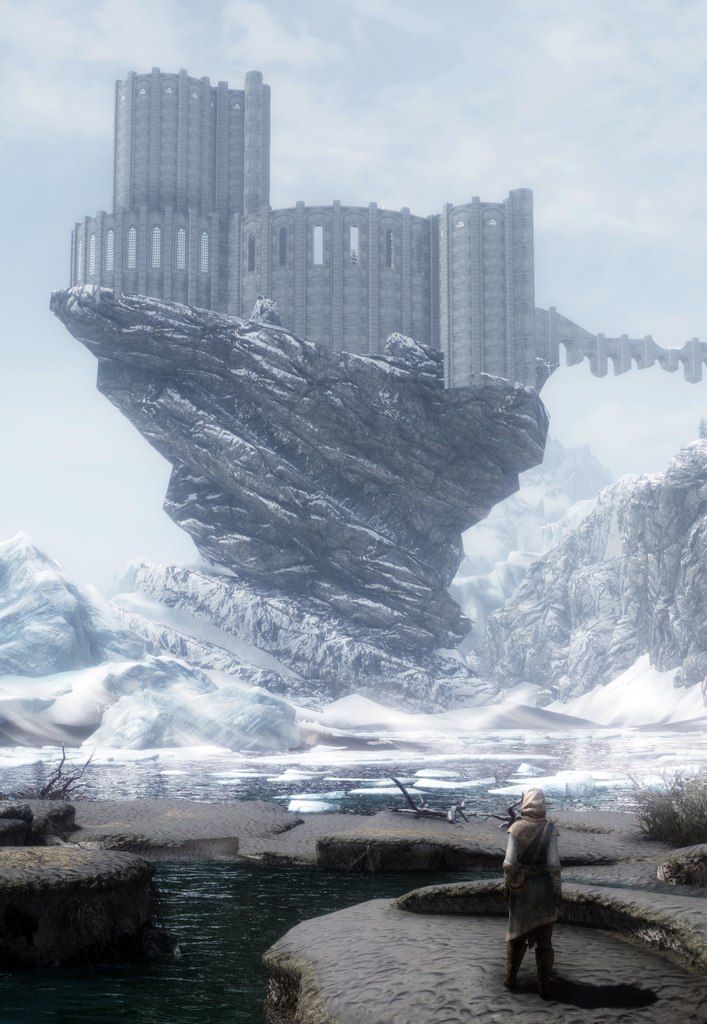
The College of Winterhold has none of that structure. It operates as a single, isolated location with no branches, no standardized ranking system beyond internal titles, and no authority outside its own walls. There is no expectation that it should regulate magic in Skyrim, and it does not attempt to do so. If anything, it avoids involvement with the outside world unless absolutely necessary. This makes it less of a governing body and more of a self-contained research institution.
Access To Knowledge
One of the most overlooked differences is how each institution handles access to knowledge. The Mages Guild, especially during its peak, was built around accessibility. Even lower-ranking members could access training, basic spells, and services. Advancement was structured and tied to demonstrated skill and contribution. In contrast, the College of Winterhold is far more closed off. Entry requires immediate proof of magical ability, and once inside, there is no clear progression system in the same sense. Advancement is less about rank and more about individual study or involvement in specific events.
Regulation is where the divide becomes even clearer. The Mages Guild actively restricted certain types of magic, most notably necromancy. These rules were enforced across all guild halls, at least in theory, and violations could lead to expulsion or worse. The goal was to maintain public trust and prevent dangerous practices from spreading. The College of Winterhold does not enforce these kinds of broad restrictions. While individual members may have their own views, there is no unified policy that applies beyond the College itself. Magic is studied more freely, without the same concern for how it is perceived by the outside world.

Their relationship with society is also fundamentally different. The Mages Guild was integrated into daily life. People relied on it for magical services, guidance, and solutions to problems that required specialized knowledge. It had a public-facing role and needed to maintain a certain level of trust. The College of Winterhold operates in the opposite way. It is physically and socially separated from the rest of Skyrim, and most people view it with suspicion rather than reliance. Instead of serving the public, it exists alongside it, largely ignored unless something goes wrong.
Another key difference is how each institution handles power and leadership. In the Mages Guild, leadership decisions could affect multiple provinces and shape how magic was practiced across the Empire. The Arch-Mage was not just a figurehead, but a position with real influence over policy and direction. At the College of Winterhold, the Arch-Mage’s authority is limited to the College itself. There is no wider system to manage, and no expectation that decisions made there will impact anything beyond its own members.
How They Respond To Risks
The way each institution responds to risk also highlights their differences. The Mages Guild was built to prevent uncontrolled magical incidents by standardizing practices and enforcing rules. The College of Winterhold, on the other hand, is more reactive. It allows dangerous experimentation to occur within its walls, dealing with consequences as they arise rather than preventing them through strict regulation. This difference reflects their core purposes: one is designed to control magic, the other to explore it.
In a broader sense, the College of Winterhold represents what remains after the Mages Guild’s influence disappeared. Without a central authority, magic becomes decentralized, less consistent, and more dependent on individual institutions. The College continues the study of magic, but it does so without the responsibility or reach that defined the Guild.
Ultimately, the difference is not just structural, but philosophical. The Mages Guild treated magic as something that needed oversight, organization, and control. The College of Winterhold treats it as something to be pursued, understood, and pushed further, regardless of how it is viewed from the outside. That shift reflects a larger change in Tamriel itself, from a unified system of magical authority to a fragmented and uncertain landscape.